
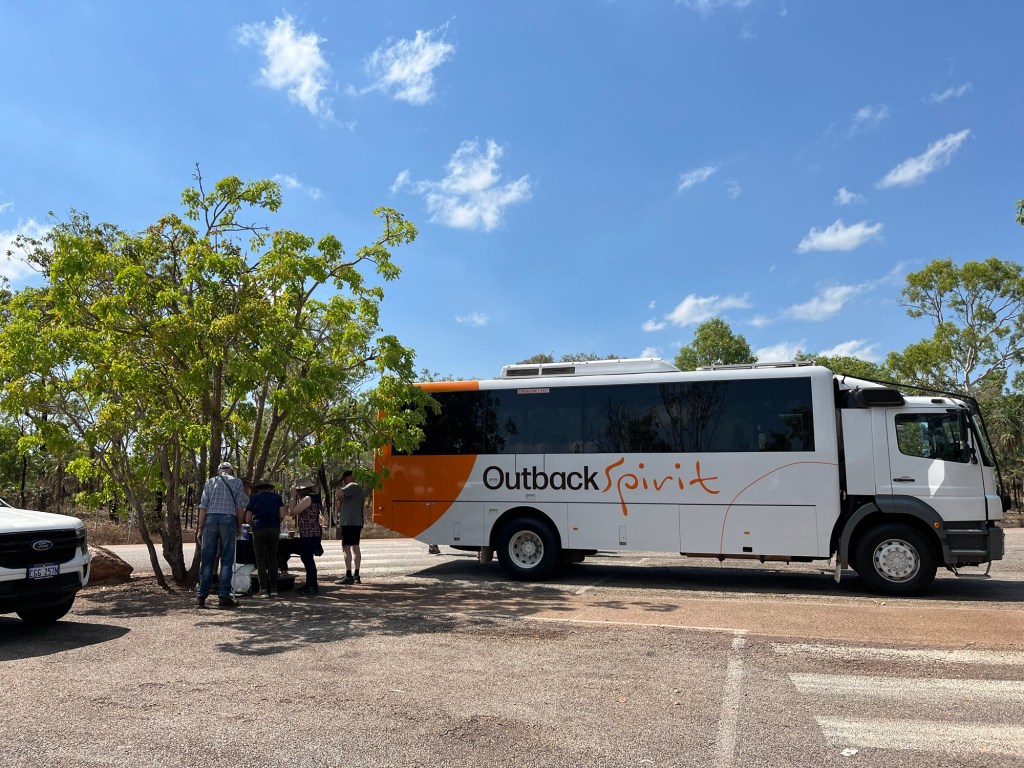
This morning we departed Darwin to travel to Litchfield National Park and then on to Kakadu National Park. In fact we have just been told we travelled 550 km to reach Kakadu on the very long Stuart Highway. The first stop was to see the enormous termite mounds (which are all the way along this long highway) and the driver set up morning tea in the shade. The boss was very ‘appy as lamingtons appeared on the table! The landscape never really changed for the entire journey, with the exception of very expansive mango orchards at Humpty Doo where mango trees dripping in fruit extended as far as the eye could see. The mangoes in the Northern Territory ripen before the Queensland crops because of the sub tropical climate. Dragonfruit is also grown in abundance here. The bush everywhere else, with the exception of a few wetland areas, was a mass of trees of varying species with the undergrowth of cycads and grasses (along with thousands of termite mounds). In many areas there had been controlled burn offs eliminating the undergrowth to stop wildfires spreading. These termite mounds, by the way, can reach 2 metre in height.
We passed through Batchelor, an outback settlement out here in the National Park which is predominantly an educational centre for indigenous people. On we travelled on Rumjumble Road out of Batchelor where lush trees and palms were a beautiful shade of green contrasting the deep orange earth surrounding them – this was an area years ago where uranium was mined.
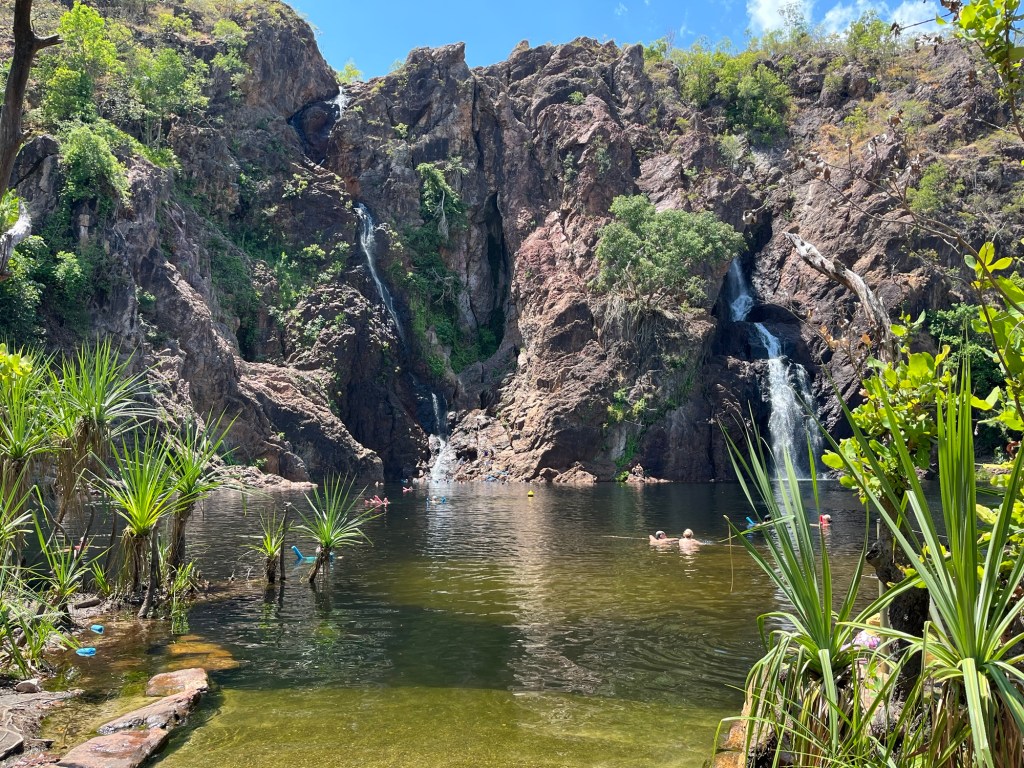
Prior to our lunch stop, there was a visit to Wangii Falls where many people were swimming in the pond. We walked the boardwalks surrounding the water to see large spiders and lizards! OMG – between the crocodile warnings, the spiders, lizards and snakes we are almost tip toeing around these scenic places and if I hear the slightest crackling of the undergrowth I am regretting I didn’t purchase Stress Remedy from Chemist Warehouse! The boss copes with the thought of these creatures much better than the one he chose to travel with!
Eventually we arrive at the beautiful Kakadu National Park and this park extends over 20,000 square kilometers – huge. It is the first place on earth to get dual UNESCO World Heritage status for its Natural Beauty and Culture.
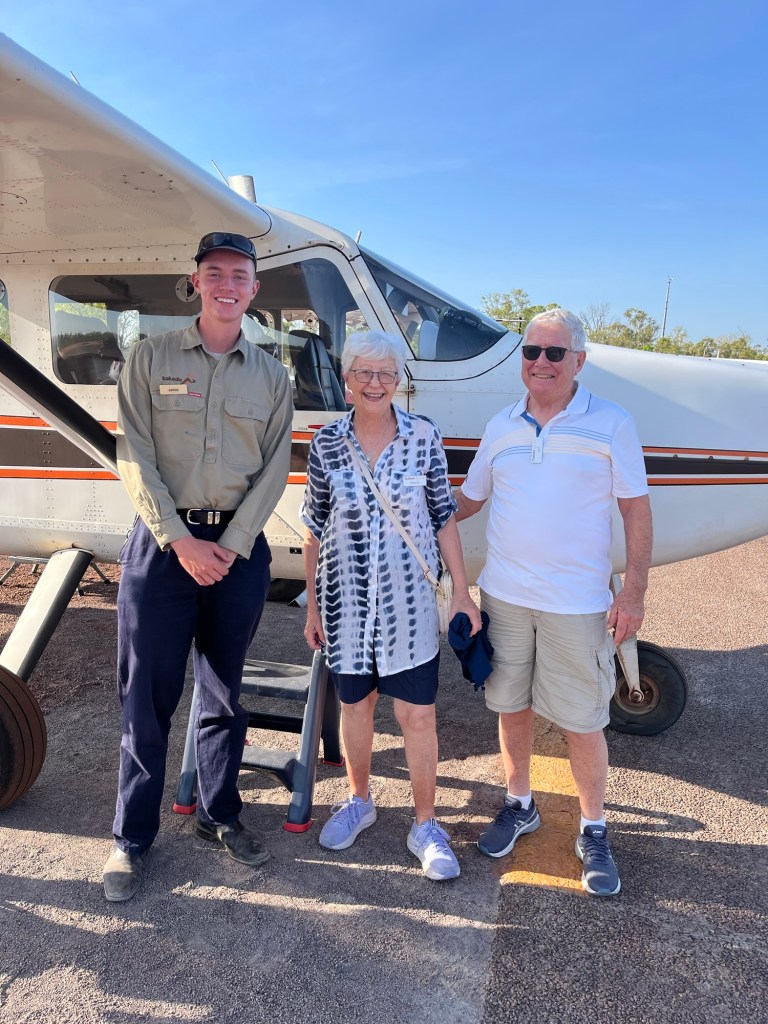
Onto Day 2 of our Top End tour and we had to set the alarm for 5.30 am to have a quick brekkie and be out at the bus to travel to Jabiru, which is the gateway to Arnhem Land. This township was established in 1982 to service the nearby Ranger uranium mine. We arrive at Jabiru Airport where five Cessna’s were waiting for our half awake troops to climb aboard to see the magnificent Kakadu National Park at sunrise from the air. Now this group of young pilots looked like schoolboys to be honest, but they welcomed us very professionally and got us aboard in pre-arranged seating. The thing is, our weights had to be sent in a few months ago when we booked this tour and whenever we go on a holiday or a tour the clothes shrink, so the question is – are the weights I sent in accurate? I would say not but I am not saying a thing as we are told where to sit, put on the headphones, do the safety briefing and off we go.
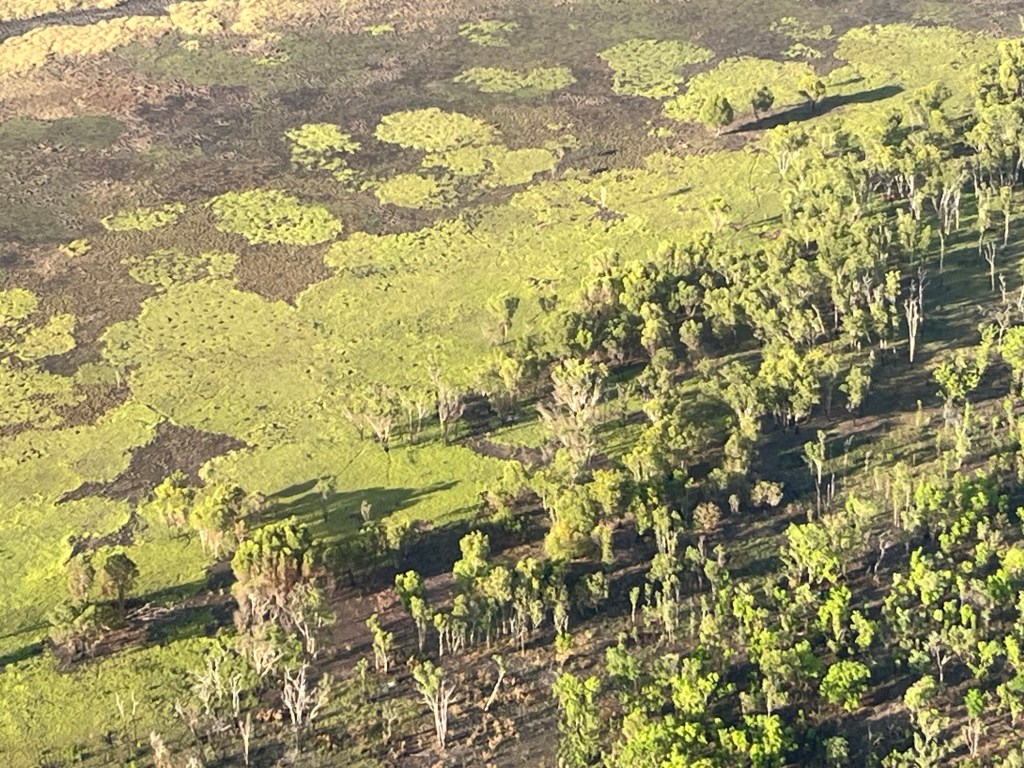
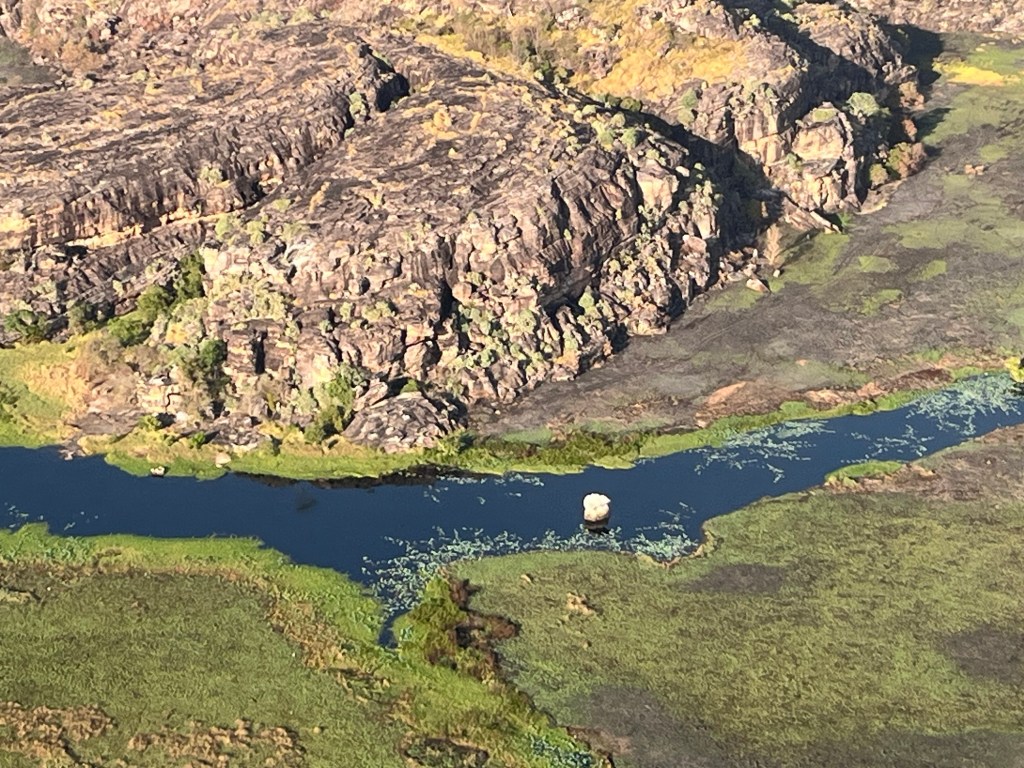
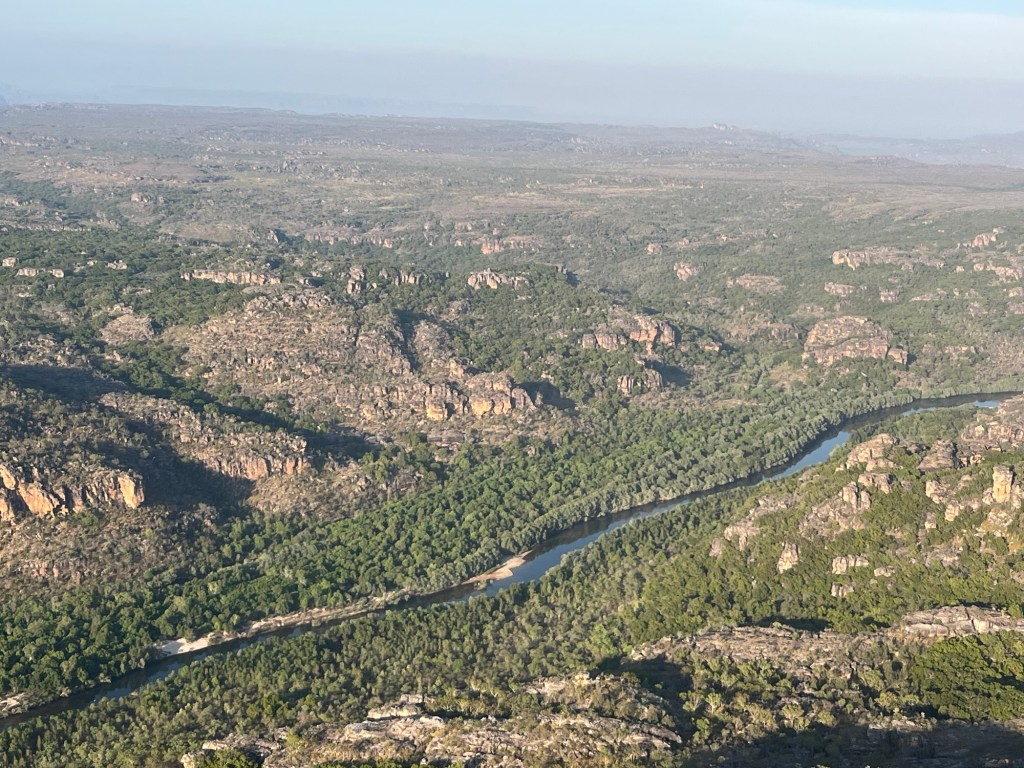
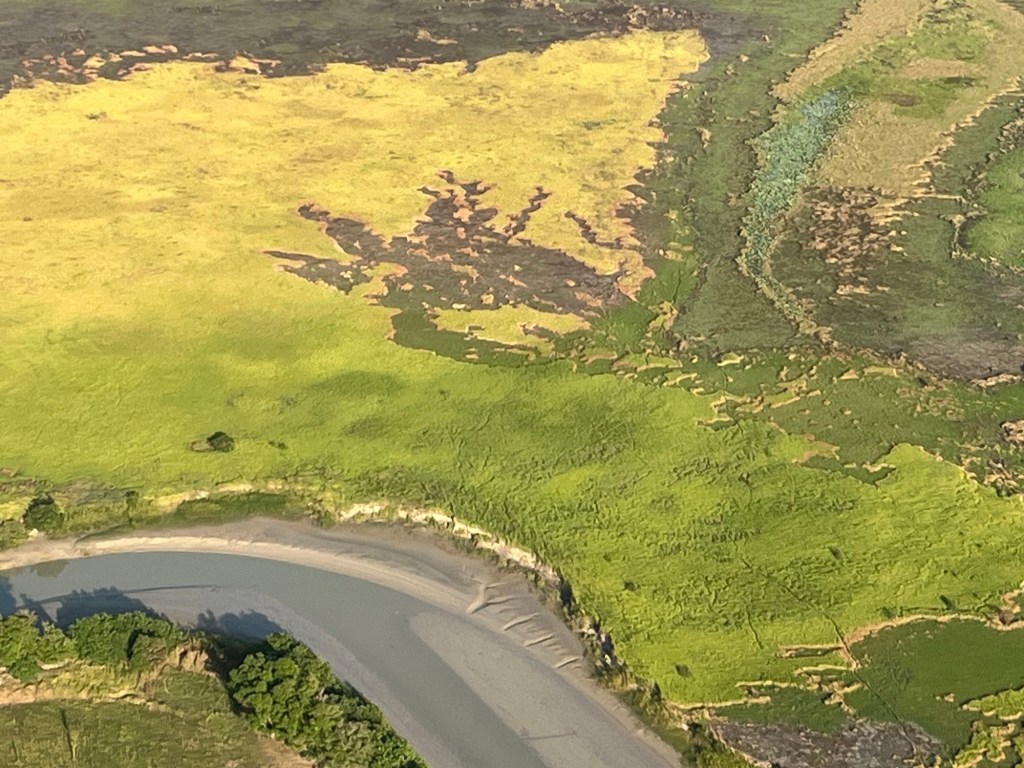
Soaring above this utterly incredible landscape was beyond awesome. Whereas the 550 km we travelled yesterday to get here, the landscape of trees and undergrowth was repetitive, when you are looking from above and going further out into this massive National Park, you see the glistening wetlands of streams and rivers meandering their way through like pathways taking water to animals that live in this park. You see the layers of rock formations changing colour from dark brown to orange, purple, yellow and red as the morning sun shines down on them, and the vibrant green carpet of the floodplains looks like bright green velvet draping itself over the flat plateaus of Arnhem Land. It was utterly magnificent and it is obvious why this treasure of a park has been given dual UNESCO World Heritage Status.
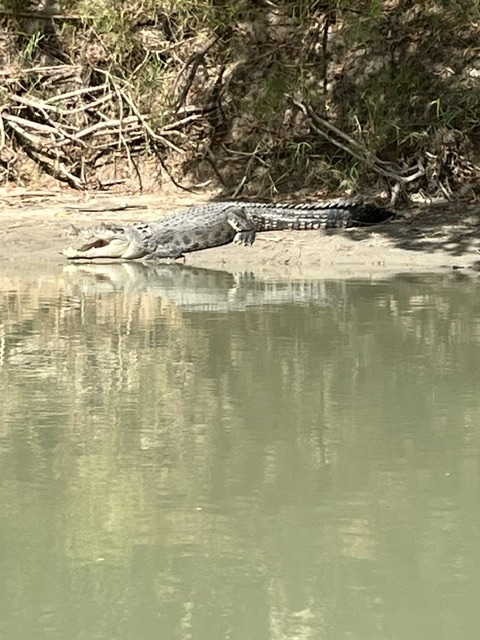
Onto the next activity where we travel on the Arnhem Highway to meet one of the indigenous caretakers of the land to see saltwater crocodiles and see them we did. After being given the safety instructions – keep your hands, arms, cameras, wives etc inside ze boat and do not let anything hang over or out from the railings. It is not difficult to abide by all this when you see the size of these creatures sunbathing on the banks of the river. A few pairs of eyes surfaced to see if they approved of this motley bunch of onlookers but praise be – we didn’t seem to interest them. Motoring up the river we see different bird species and some of the magnificent rock formations of Arnhem land. Following this (and you can tell we had a busy morning) we went to Ubirr where we did a walk (a very hot walk) to see ancient rock art where it was interesting to make out the shapes. By now, many of us were wilting in this very hot environment with the heat radiating up from the earth and from the rocks on this 38 degree day. There was a plus in all this because we were likely losing weight we were so wet with the heat. It was so very important to have a hat, to have your water bottles filled and to be constantly sipping to keep up the fluids. We have not been quite this hot since our tour bus broke down on the edge of Death Valley in the US at midday – no trees for shade and the sun beating down. No air conditioning in the bus because of broken fan belt and the temperature was in the 40’s and there we were for a couple of hours until the mechanic could get there and get the simple problem of a broken fan belt fixed.
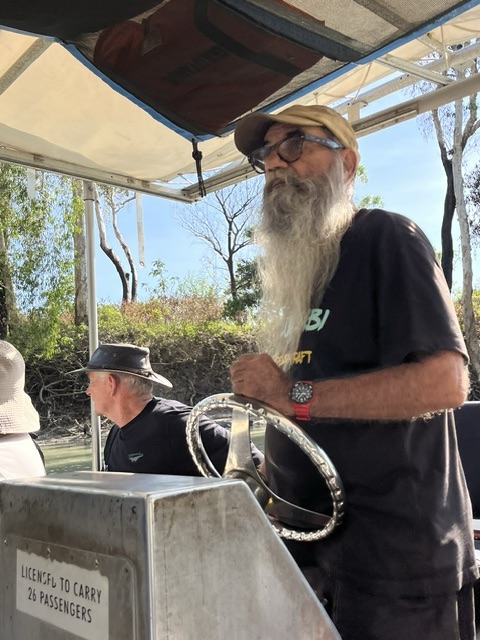
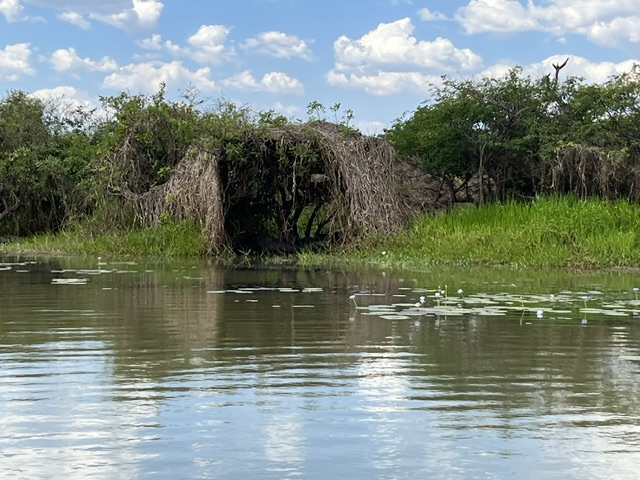
On the last day of this tour before returning to Darwin we departed Jabiru after a look around the township and onto a very informative Information Centre. From there we travelled to the Cororabee Billabong for an enjoyable cruise on the waterway to see water buffalo, wild pigs, many different bird species, fresh and saltwater crocodiles and wallabies. This billabong is surrounded by an enormous floodplain and in a few weeks, the dry season will come to an end and the wet season that follows floods this entire area with waters more than 1 metre deep. You can see the height of where the waters have been by the grasses that have been tossed up and over bushes. The volume of water that will soon flood this area over the course of about 3-4 months is hard to comprehend but it has been like this for hundreds of years.
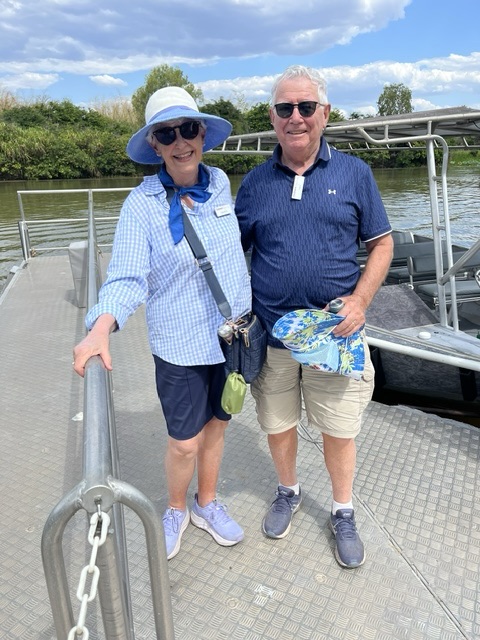
Astoundingly we have survived this week of temperatures between 32 and 38 degrees every day. How we did this I am not really sure to be honest but let’s just say the inclusive drinks package helped, the amount of fluid we lost each day just had to be replaced – end of story! This blimmin red earth has mucked up my nice purple ASICS and I have spent each evening tidying them up. The boss lost his sun hat somewhere – just where we have no clue so he picked up this Hawaiian sun hat which means I can easily spot him in a crowd so that’s an advantage when he wanders off! You don’t wander off far when the sun is beating down on your head and the heat from the red earth is coming up your shorts – you sort of hop from tree to tree to try and stay in the shade. It is onto the Ghan tomorrow and we don’t see the temperatures dropping but we are excited to see the red centre of this vast country.


Hi Shannon and Vern,
I hope you are enjoying the journey on the Ghan and that you have wifi so you that you can keep sending us interesting stories. The flight over an amazing landscape must have been a real highlight. We have been in Perth a week now and leave tomorrow to spend two weeks driving to various places including Margaret River, Albany and Wave Rock. We’ve really enjoyed Perth and have a few more things to see here when we come back for an extra 3 days. Rottnest Island was one of our favourite places. We went there 37 years ago so it is much more touristy now.
Best wishes for more exciting travel. I hope you are recovering well from the shingles.
Love, Jill
LikeLike